Last updated September 24, 2026
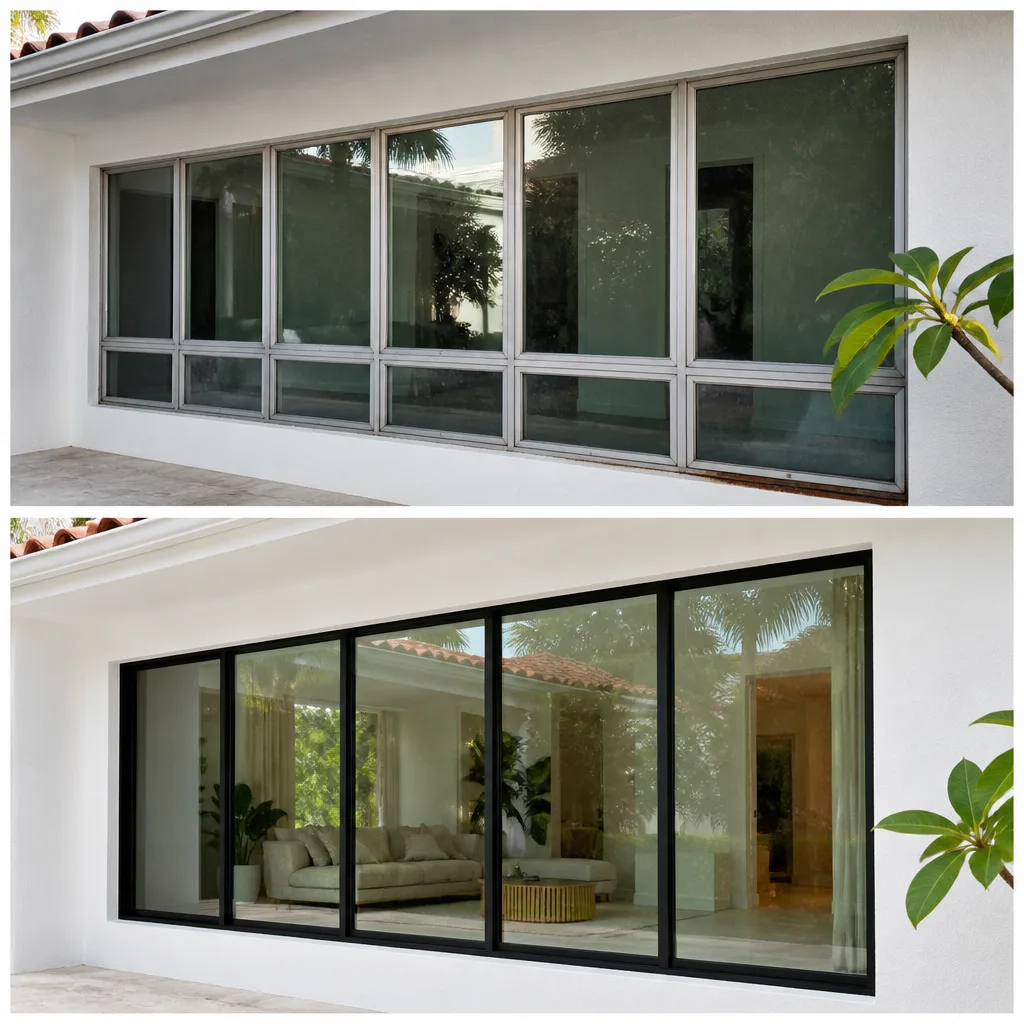
New windows and doors improve comfort, cut energy bills and add long-term value to your home. Sightline Windows & Doors North Miami pairs proven product lines with our own installing crews for lasting performance - and a price we put in writing.
1. Choose your installer
The unit is half the job - the install is the other half. Our own background-checked crews measure, set, seal and insulate every opening, and they know the lines we quote inside and out because they install them every week.
2. Select the right products
Compare styles, materials and glass packages side by side until the fit is right for your rooms, your budget and your goals. The product-line comparison below is the place to start.
3. Prepare your home for install
Before install day we walk you through a short checklist - furniture pulled back, treatments down, a clear path to each opening - so install day is watch-it-happen, not scramble.
Compare the Lines We Quote
Every project is priced on the same lines, side by side - the price indicators below are relative, and your consultant shows exact numbers on your actual openings.
PGTThe line Florida homeowners arrive naming - the most Miami-Dade certifications in the industry$$$
- More Miami-Dade NOA certifications than any other line we quote
- WinGuard, EnergyVue and ClassicVue Max systems built for every wind zone
- 99% on-time delivery keeps your install date on the calendar
CGIThe heavyweight impact line$$$$$
- Large-missile impact ratings for the strictest wind zones
- Architectural-grade aluminum with commercial-depth frames
- The line we quote when protection is the whole point
CWSThe Florida value pick$$
- Vinyl systems built in Florida for Florida codes
- Strong energy packages at the friendliest price point
- The smart start for whole-home replacements on a budget
ESWSlim lines, big glass$$$$
- Narrow-sightline aluminum for modern elevations
- Oversized openings and floor-to-ceiling glass
- Impact-rated without the bunker look
ECOThe aluminum impact workhorse$$$
- Miami-built aluminum impact systems
- A strong price-to-protection ratio for coastal homes
- Proven inventory lines with short lead times
Windows & Doors Warning Signs: A North Miami Homeowner’s Reference Guide
A brown ring on an interior windowsill in North Miami is not a housekeeping issue. It is the visible evidence of a capillary moisture path that has already been active long enough to saturate the rough framing behind the drywall, and the sill stain appears only after the structural damage is underway. In our 18,000+ openings since 2012, we have documented this exact progression hundreds of times in North Miami homes built between 1950 and 2020. The stain color, its location on the frame, and the season it first appears each tell a different story about what is failing and how quickly it needs to be addressed. This guide maps those signals to their actual causes, assigns repair urgency tiers, and shows you which observations to document before calling any contractor; for how to hire a windows & doors contractor in North Miami, see our step-by-step companion guide.
Quick Answer
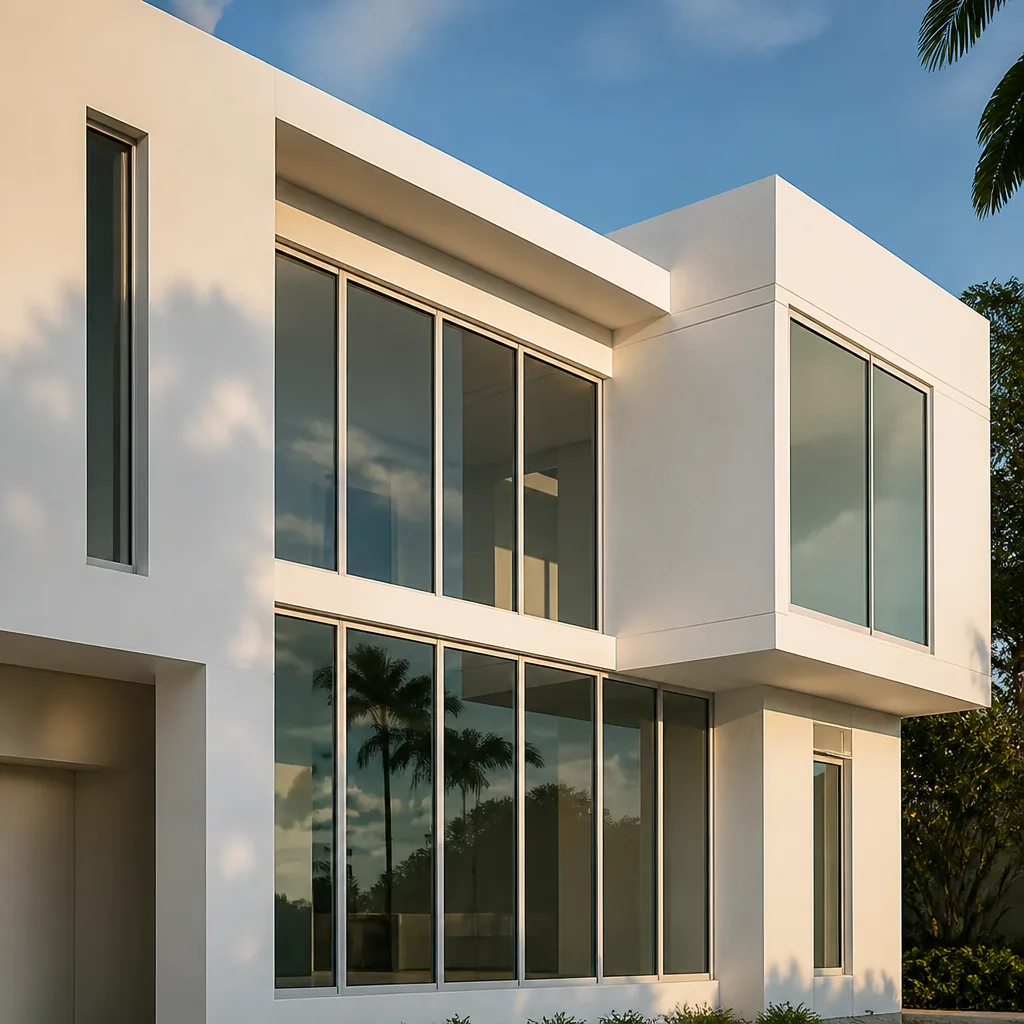
Window and door warning signs in North Miami fall into three urgency tiers: cosmetic (surface sealant failure, minor hardware wear), structural (frame movement, moisture intrusion, IG seal failure), and safety-critical (impact glazing delamination, compromised lock engagement, water-damaged load-bearing jambs). Most homeowners misread structural signs as cosmetic, deferring repairs that multiply costs by 5x to 10x. The key is reading stain color, sound, and operational resistance correctly, then documenting findings with photos and humidity readings before the damage progresses to adjacent wall assemblies.
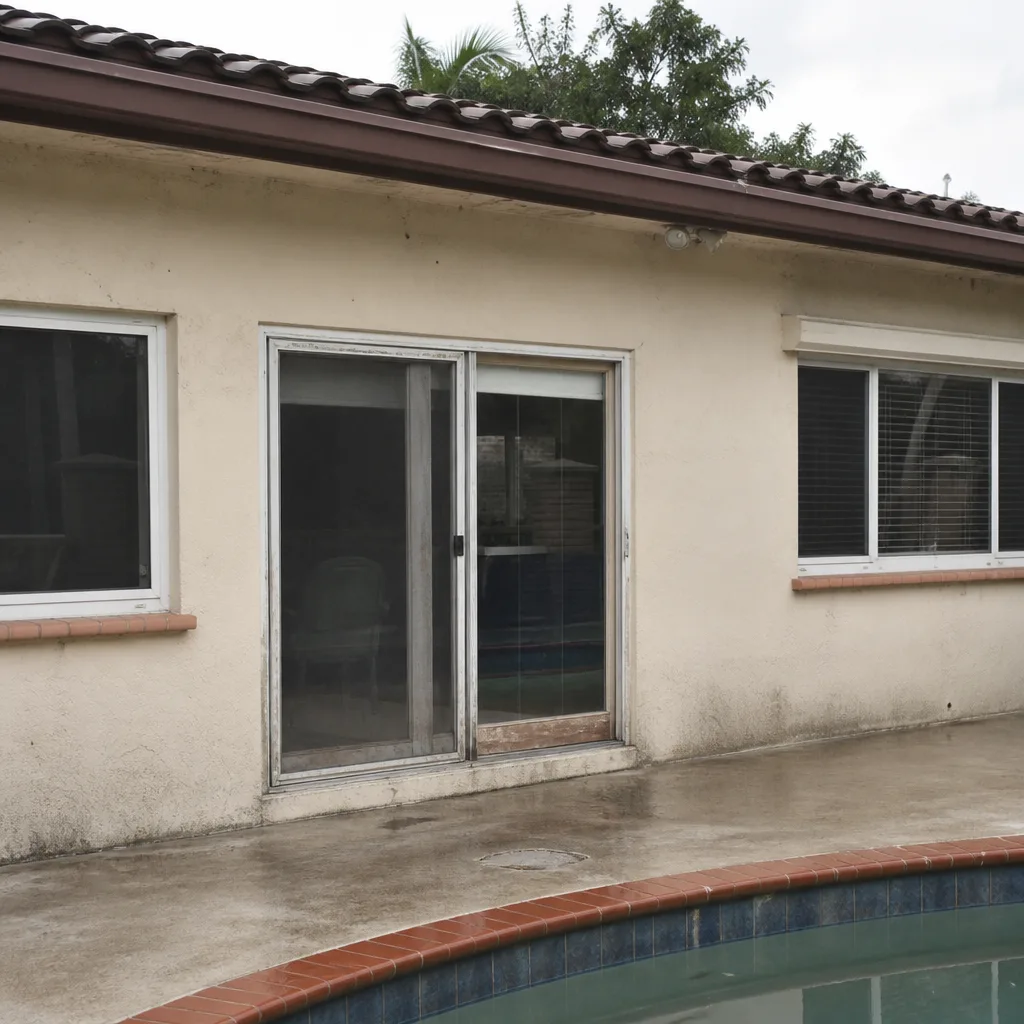 Before
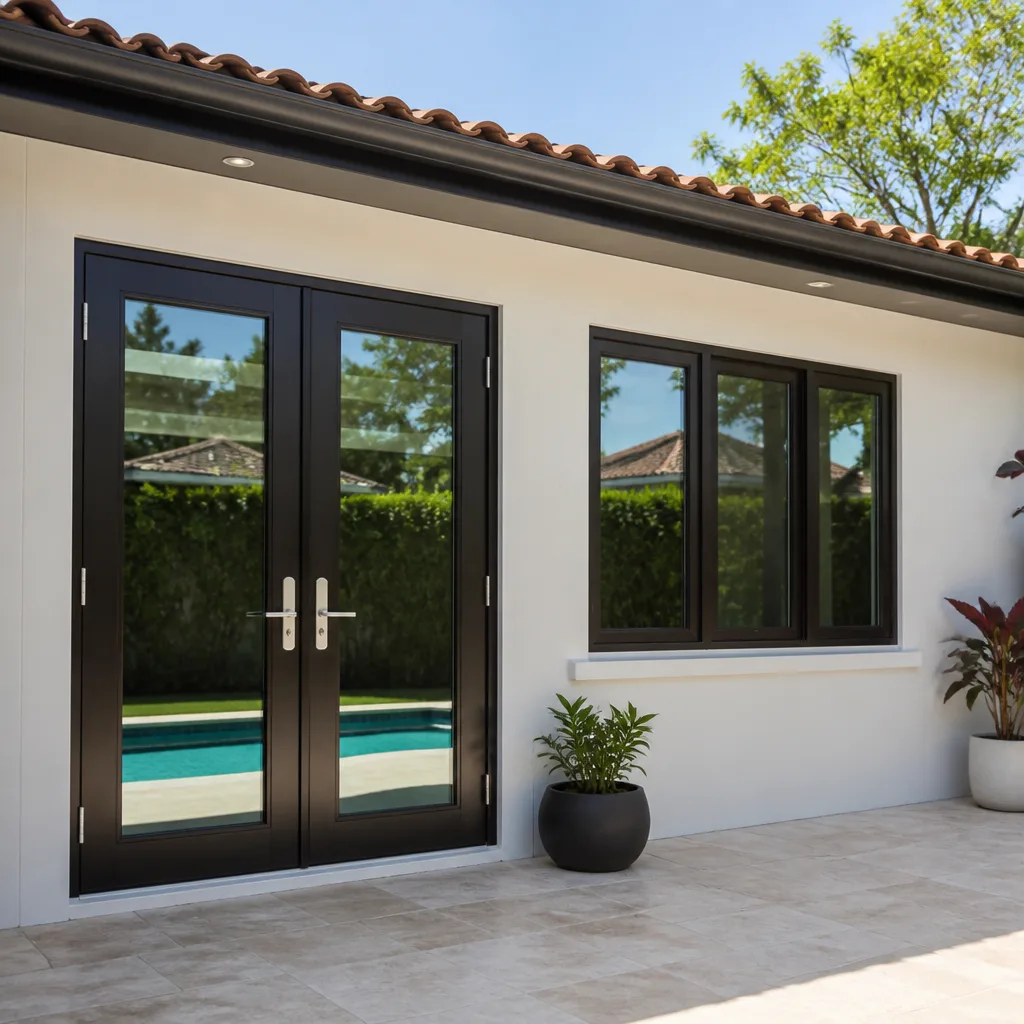 After
AfterTable of Contents
- Visual Triage: What Stain Color and Location Actually Mean
- IG Seal Failure vs. Interior Condensation: The Dollar-Bill Test
- Door Operation: Distinguishing Frame Movement from Hardware Wear
- The Sound Test for Impact Glazing Delamination
- When a Warning Sign Voids Your Warranty
- North Miami Climate Factors That Accelerate Failure
- Documenting Findings: What to Record Before Calling
- Common Mistakes to Avoid
- When to Call a Professional
- Frequently Asked Questions
Visual Triage: What Stain Color and Location Actually Mean
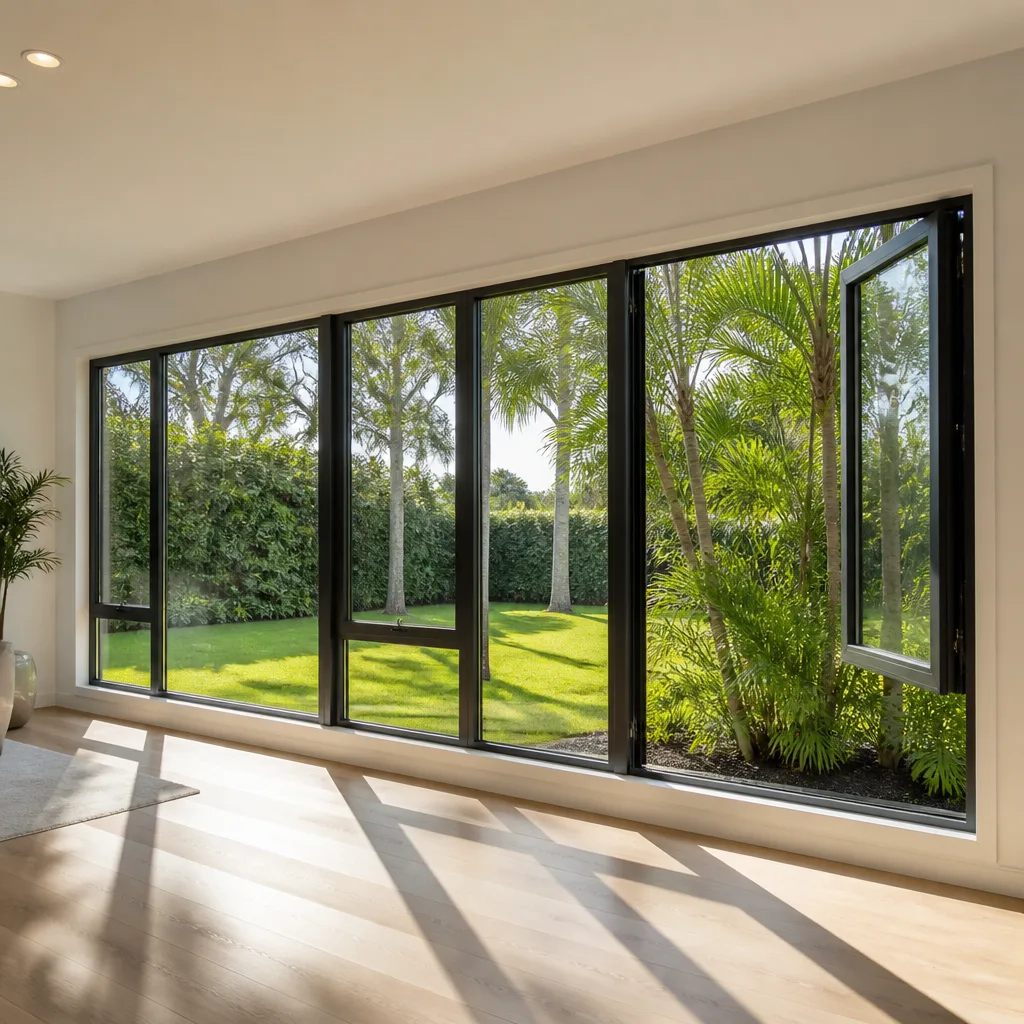
North Miami’s humidity, salt air, and seasonal driving rain create a specific set of moisture paths through window and door assemblies. The stain you see on the interior is rarely where the water entered, and its color indicates what has been damaged along the way.
White Efflorescence
White, powdery deposits on the interior frame or sill indicate mineral salts carried through masonry or concrete by capillary action. In North Miami, we see this most often in pre-1980s homes with original cast-concrete sills or in additions where the sill pan was omitted during renovation. The water source is below the window, not above it, and the repair requires addressing the sill pan drainage path, not the window seal.
Urgency tier: Moderate. The moisture is moving, but the salts indicate slow, evaporative drying rather than active pooling. Left unaddressed, the alkaline environment degrades aluminum frame finishes and corrodes steel fasteners.
Brown Organic Staining
Brown or yellow-brown rings on drywall adjacent to the frame, or on the sill itself, indicate organic material in the water path, typically wood extractives from the rough framing or sheathing. This is the signature of a leak that has reached structural lumber. In North Miami’s climate, brown staining on a north-facing window appearing in October or November almost always traces to summer rain intrusion that saturated the framing through a compromised head flashing, with the stain emerging only after two to three months of slow drying.
Urgency tier: High. The rough framing is wet enough to support mold colonization, and the structural integrity of the jack studs or header may be compromised. We have removed windows in North Miami’s Sans Souci and Keystone Point areas where the header above the opening had lost 40% of its cross-section to rot, with the interior showing only a modest brown ring.
Black or Dark Gray at Corners
Concentrated dark discoloration at the lower corners of the frame, particularly on vinyl or fiberglass units, indicates trapped condensation in the weep system or blocked drainage channels. In North Miami, pollen and salt residue clog weep holes within 18 to 24 months if not cleared during routine cleaning. The black color is surface mold on accumulated dust and organic debris, not necessarily structural rot, but the blocked drainage forces water into the rough opening during wind-driven rain.
Urgency tier: Moderate to high, depending on duration. A six-month blockage usually cleans up with weep channel clearing and frame resealing. A two-year blockage typically requires jamb extension replacement and sill pan inspection.
Stain Location Mapping
- Top of frame, center: Head flashing failure or missing end dams; water enters at the lintel and runs down the interior of the header.
- Top of frame, corners: Improper shingle-lap of building paper or housewrap at the header; common in second-story additions where the original wall-to-roof transition was not re-flashed.
- Bottom of frame, center: Sill pan back-dam too low or missing; water overflows the pan interior edge during heavy rain.
- Bottom of frame, corners: Jamb-to-sill joint seal failure; the most common leak point in vinyl window installations from 2005 to 2015.
- Mid-height, either jamb: Fastener penetration without sealant, or nail-fin fold creating a capillary break; often visible from exterior as a slight discoloration in the siding.
IG Seal Failure vs. Interior Condensation: The Dollar-Bill Test
A fogged or hazy window does not automatically mean the insulated glass (IG) unit has failed. In North Miami, interior condensation on the room-side surface is common from November through March, when exterior temperatures drop below the dew point of conditioned interior air. Misdiagnosing interior condensation as IG seal failure costs homeowners $400 to $800 in unnecessary glass replacement.
The Dollar-Bill Test
- Wait for the fog or haze to appear, typically early morning.
- Press a dollar bill flat against the glass surface where the fog is visible.
- If the fog is on the exterior surface (room side), the bill will make crisp contact and the fog will not be between the bill and your eye. If the fog is between the glass lites (IG seal failure), the bill will appear hazy or distorted through the fog layer.
- For confirmation, run a dehumidifier to 45% relative humidity for 24 hours. Interior condensation clears; IG seal fog persists or worsens as the desiccant in the spacer becomes saturated.
Humidity Reading Context
North Miami’s outdoor relative humidity averages 72% annually. Interior humidity in homes with standard HVAC operation should run 50% to 55%. If your interior humidity is above 60% with the air conditioning running, the condensation is an HVAC distribution issue, not a window defect. We see this frequently in North Miami’s older homes with single-return duct systems, where bedrooms at the end of the duct run receive insufficient dehumidified air.
Cost Difference Between the Two Repairs
| Condition | Repair | Typical Cost Range in North Miami |
|---|---|---|
| Interior condensation | HVAC balancing, dehumidifier, or supplemental return | $150 - $400 |
| IG seal failure, standard size | IG unit replacement (glass only, frame retained) | $280 - $520 per unit |
| IG seal failure, oversized or custom | IG unit replacement, possible sash replacement | $450 - $890 per unit |
| Failed IG with damaged frame | Full window replacement | $680 - $1,400 per opening |
The critical documentation: photograph the fog pattern with a date stamp, record interior humidity with a calibrated hygrometer, and note whether the pattern clears by midday. IG seal failure typically shows a half-moon or band pattern at the bottom of the lower lite, where the desiccant-filled spacer channel has failed. Interior condensation is more uniform and tracks with occupancy and cooking patterns.
Door Operation: Distinguishing Frame Movement from Hardware Wear
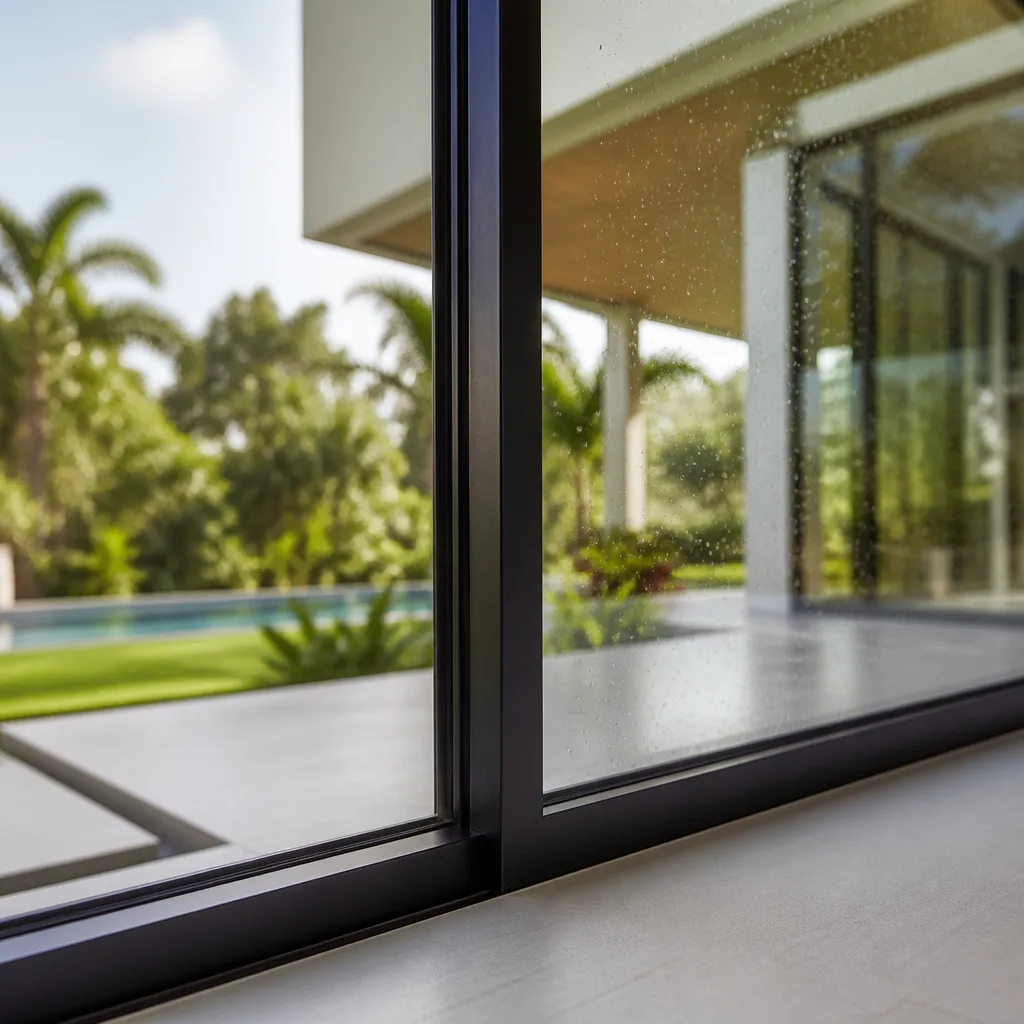
A door that sticks, drags, or requires shoulder pressure to latch can indicate three distinct problems with very different repair costs. Misdiagnosing frame movement as hardware wear leads to repeated service calls and progressive structural damage.
Test 1: The Hinge-Pin Reveal
Close the door and examine the gap between the door edge and the jamb, top to bottom. A consistent gap of 1/8 inch to 3/16 inch indicates the frame is square and the issue is in the door slab or hardware. A gap that tapers, widens at the top or bottom, or disappears entirely at one corner indicates frame racking or settling.
In North Miami, frame movement is most common in homes built on Miami oolite limestone with post-tension slab foundations, where seasonal moisture variation causes minor slab movement. We see this pattern frequently in North Miami’s Biscayne Gardens and Westview neighborhoods, where 1960s and 1970s construction used shallower footings than current code requires.
Test 2: The Latch Strike Alignment
Mark the latch bolt with lipstick or chalk, close the door firmly, and examine the strike plate. If the mark is centered vertically but offset horizontally, the door slab has warped or the hinges have sagged. If the mark is vertically offset, the frame has dropped or the header has compressed.
Vertical offset in exterior doors often indicates water intrusion at the sill that has compressed the jack studs or compromised the header bearing. This is particularly common in North Miami’s pre-Hurricane Andrew construction, where 2×4 headers were standard over patio door openings that now require engineered LVL or steel.
Test 3: The Corner-to-Corner Diagonal
Measure the door opening diagonally from upper left to lower right, then upper right to lower left. A difference of more than 1/4 inch indicates frame racking. In impact-rated door systems, this racking stress transfers to the laminated glass or impact-resistant panel, potentially compromising its design load capacity.
Repair Cost Mapping
- Hardware wear only: Hinge replacement, strike adjustment, latch set replacement - $85 to $220.
- Slab warping (non-impact wood or fiberglass): Door replacement, frame retained - $450 to $780.
- Slab warping (impact-rated): Door replacement with re-certification - $890 to $1,600.
- Frame movement, localized: Jamb rebuild, sill pan correction, re-shim - $680 to $1,200.
- Frame movement with structural repair: Header replacement, jack stud sistering, full reinstallation - $1,800 to $3,400.
The operational test that saves the most money: before calling any service, operate the door with the deadbolt retracted. If the latch alone requires force, the issue is likely alignment or hardware. If the door operates smoothly with the deadbolt retracted but binds when extended, the frame has moved and the bolt path no longer aligns with the strike mortise.
The Sound Test for Impact Glazing Delamination
Impact-rated windows and doors in North Miami are required by the Florida Building Code in the High-Velocity Hurricane Zone. These units use laminated glass, a sandwich of glass-polyvinyl butyral (PVB) interlayer-glass that holds together when shattered. Over time, particularly in high-heat, high-UV environments, the PVB interlayer can delaminate from the glass plies, creating a visible haze at the edges and progressively compromising impact resistance.
The Sound Test Protocol
- Close the window or door fully.
- Lightly tap the center of the glass with a hard object, a key or the back of a screwdriver handle.
- Listen for the resonance: intact laminated glass produces a clear, musical ring with sustained decay. Delaminated glass produces a dull thud with rapid decay, similar to tapping a drinking glass versus a plastic cup.
- Repeat at the corners and mid-edge, where delamination typically begins.
- Photograph any edge haze or iridescence, which indicates active moisture intrusion into the PVB layer.
What the Sound Indicates
A clear ring across the entire surface indicates the laminate bond is intact and the unit retains its design pressure rating, typically 50 psf to 70 psf for North Miami’s exposure category. A dull thud localized to one corner indicates early delamination, usually 10% to 15% of the edge length. The unit still meets code but should be scheduled for replacement within 12 to 18 months. A dull thud across the full surface indicates advanced delamination; the unit may not withstand design wind loads and should be treated as failed.
Delamination is not repairable. The IG unit or full sash must be replaced, and the replacement must carry a current Miami-Dade County Notice of Acceptance (NOA) or Florida Product Approval for the specific exposure and application. Sightline’s eight manufacturer lines, including PGT and CGI, maintain current NOAs for all impact-rated products we install in North Miami.
One North Miami-specific factor: units facing Biscayne Bay or open water with southern or western exposure show delamination rates roughly double those in shaded, inland orientations. The UV-heat cycling accelerates PVB degradation. We recommend annual sound testing for waterfront installations older than eight years.
When a Warning Sign Voids Your Warranty
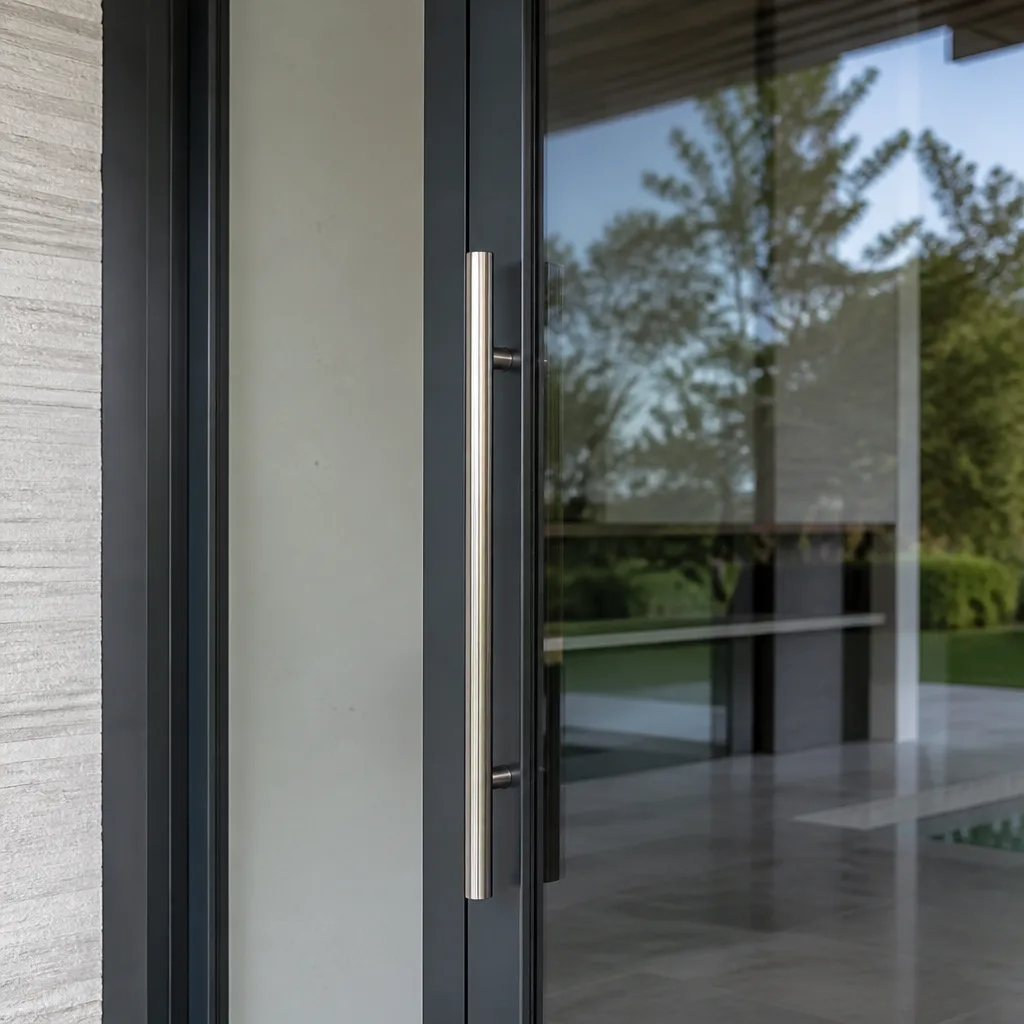
Window and door warranties in Florida are split between manufacturer coverage (defects in materials and workmanship of the unit itself) and contractor workmanship coverage (installation quality, flashing, sealant, and integration with the wall assembly). Understanding which coverage applies, and what documentation is required, determines whether a repair costs you nothing or $2,000-plus.
Manufacturer Warranty Claims
Manufacturer warranties, including those from PGT, CGI, and Therma-Tru, typically cover:
- IG seal failure within 10 to 20 years, with prorated value after year 10.
- Frame material defects, including vinyl degradation, fiberglass blistering, or aluminum finish failure.
- Hardware mechanism failure under normal use.
Manufacturer warranties are voided by:
- Field modification of the unit, including unsanctioned drilling, notching, or attachment of aftermarket hardware.
- Use of unapproved cleaning chemicals, particularly acetone-based solvents on vinyl frames or abrasive compounds on low-E coatings.
- Failure to maintain weep systems, documented by accumulated debris causing water intrusion.
- Installation by unlicensed or uncertified personnel, which voids the NOA compliance chain.
Contractor Workmanship Claims
Workmanship coverage, including Sightline’s 365-Day Done Right Promise under the Haven Standard, covers:
- Installation defects: improper shimming, missing or reversed sill pan, inadequate sealant bead thickness.
- Flashing integration failures at the head or jambs.
- Operational issues traceable to installation squareness or fastener placement.
Workmanship coverage does not extend to:
- Structural movement of the building after installation.
- Damage from subsequent trades, including stucco or paint contractor overspray into weep channels.
- Normal wear, including weatherstrip compression set after 5+ years of use.
The Documentation Window
For manufacturer claims, you typically have 30 days from discovery to notify the manufacturer or authorized dealer, with photographic documentation of the defect and proof of original purchase. For contractor workmanship claims, Sightline’s Haven Standard requires notification within the warranty period, with our documented photo record from installation serving as the baseline for comparison.
The critical action: photograph the warning sign in context, with a date stamp and a reference object for scale, before cleaning or attempting repair. We have seen legitimate manufacturer claims denied because the homeowner cleaned the affected area before documentation, eliminating the evidence chain.
North Miami Climate Factors That Accelerate Failure
North Miami’s specific climate conditions, distinct from inland Florida or the Gulf Coast, create failure modes that homeowners elsewhere rarely encounter.
Salt Air and Coastal Exposure
Homes within two miles of Biscayne Bay, including North Miami’s eastern neighborhoods from Sans Souci to Keystone Point, experience salt deposition rates that corrode aluminum hardware and degrade anodized finishes at 1.5 to 2 times the rate of inland locations. Stainless steel fasteners are not optional in these exposures; they are code-required for a reason we document on every coastal installation. If your home is east of Biscayne Boulevard and your window hardware shows orange staining or binding, the issue is galvanic corrosion from incompatible metals in salt air, not simple wear.
Seasonal Wind-Driven Rain
North Miami’s wet season, June through October, delivers rain at 15 to 25 mph with gusts to 40 mph during afternoon thunderstorms. This velocity overwhelms standard drip cap details and tests sealant joints at pressures far exceeding static water testing. A window that leaks only during summer storms, not during gentle rain, indicates a pressure-dependent failure path, typically at the jamb-to-sill joint or a fastener penetration, rather than a simple gap.
UV Intensity and Thermal Cycling
North Miami receives approximately 2,900 hours of annual sunshine with peak UV index values of 11+. South- and west-facing vinyl frames experience surface temperatures of 140°F to 160°F, accelerating plasticizer migration and making frames brittle after 10 to 12 years. This is not a defect; it is the expected service life in this exposure. Dark-colored frames, increasingly popular for modern aesthetics, run 15°F to 20°F hotter than white and show degradation 20% sooner.
Humidity and Condensation Potential
North Miami’s average dew point runs 70°F to 75°F from May through October. Air-conditioned interiors at 75°F and 50% relative humidity will not condense on room surfaces above 55°F. However, thermal bridging at aluminum frame sections without thermal breaks can drop local surface temperatures below 55°F during peak cooling loads, creating localized condensation that mimics leak staining. The distinction matters: condensation staining is an energy-performance issue, a failed thermal break or missing low-E coating, while leak staining is a water-management issue.
Documenting Findings: What to Record Before Calling
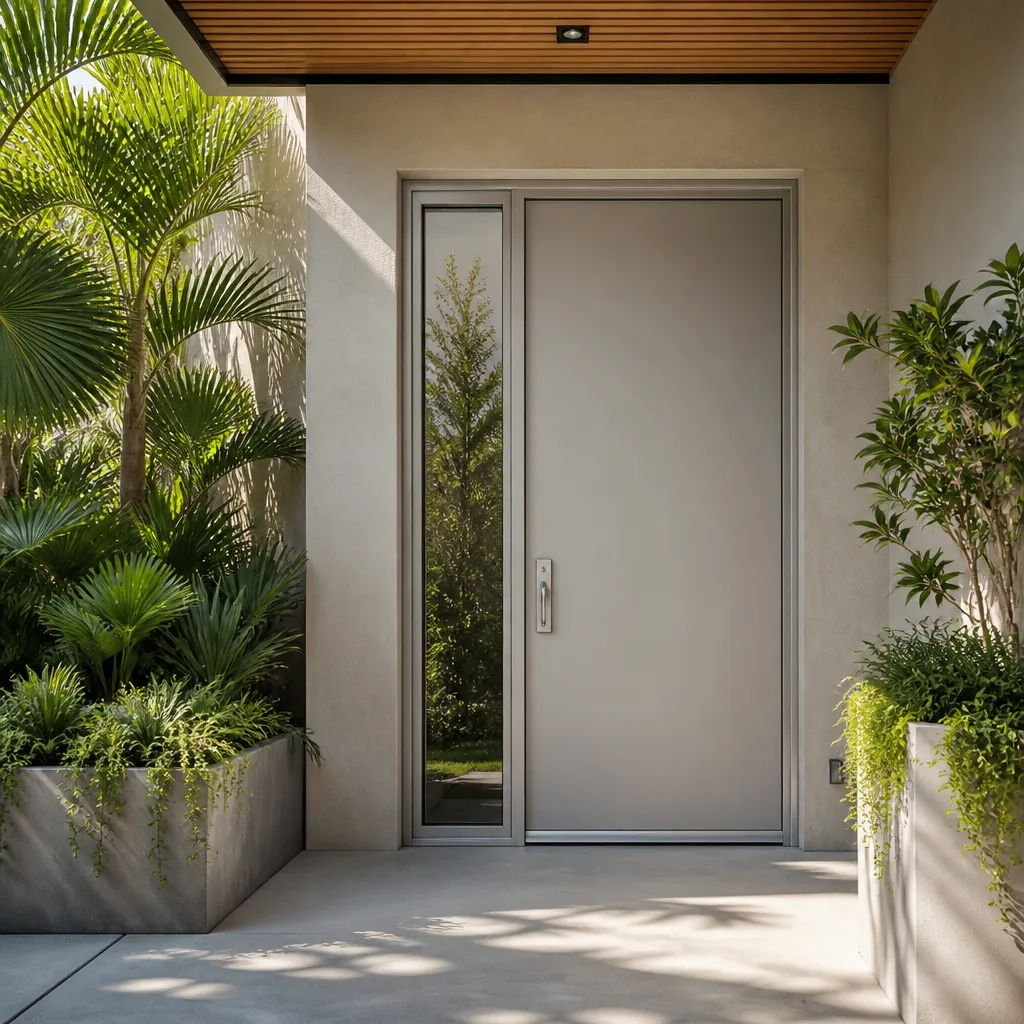
Before contacting any contractor, including Sightline Windows & Doors North Miami home, create a record that preserves the evidence and accelerates accurate diagnosis. The documentation you gather determines whether the first site visit produces a firm quote or requires a return trip.
Required Documentation Checklist
- Photograph the warning sign in context. Include the full frame, adjacent wall surface, and a reference object, ruler or dollar bill, for scale. Take the photo in natural light without flash, which can wash out stain colors.
- Record the date of first observation. Season matters in North Miami; a stain appearing in October has different implications than one appearing in June.
- Note weather conditions at discovery and 48 hours prior. Wind direction, rain intensity, and temperature swing help isolate pressure-dependent vs. gravity-dependent leak paths.
- Measure interior humidity with a calibrated hygrometer. Smartphone sensors are inaccurate; a $15 digital hygrometer from any hardware store is sufficient.
- Operate the unit and record specific symptoms. “Sticks at the top right corner” is diagnostic; “hard to close” is not.
- Locate the manufacturer’s label. Record the brand, series, size code, and date of manufacture, typically found in the track or on the frame edge. This determines warranty status and replacement part availability.
- Gather prior service records. Previous repairs, particularly sealant or hardware replacement, indicate where the assembly has already been compromised.
What Sightline Documents on Every Visit
Under Haven Clause 4, Evidence on Every Job, our technicians record frame squareness measurements, humidity readings, thermal images where indicated, and a minimum of 20 photographs per opening. The customer receives the measured survey to keep, and the written scope of work references these documented findings by image number. This is standard on every visit, not an upsell, because the measurement and the quote are the same document, Haven Clause 1.
Common Mistakes to Avoid
- Assuming a stain is “just humidity.” North Miami’s humidity is constant; a new stain is a new path, not environmental background noise. We have opened walls where homeowners delayed six months because “it’s just Florida dampness” and found headers requiring full replacement.
- Applying silicone sealant over the symptom. Caulking the interior side of a frame traps water in the wall assembly, accelerating rot and converting a $400 flashing repair into a $3,000 structural rebuild. Sealant belongs on the exterior pressure side, never as an interior patch.
- Cleaning before documenting. Manufacturer warranty claims require visible evidence of the defect. A cleaned stain is an undocumented stain, and the claim window closes.
- Matching replacement windows by appearance alone. North Miami’s code requires impact rating or shutter protection for most replacements. A visually similar non-impact unit fails inspection and requires removal. Verify the Miami-Dade NOA or Florida Product Approval before ordering.
- Ignoring operational changes after a storm. A door that operated smoothly before a tropical storm but binds afterward indicates frame movement from wind pressure or water intrusion at the sill. This is not “settling”; it is structural distress requiring inspection.
- Accepting a verbal scope without written line items. Haven Clause 1 exists because vague scopes produce change orders. Every material, every labor line, and every warranty term belongs in writing before work starts.
- Deferring impact glazing concerns. Delaminated impact glass does not provide code-required protection. Insurance policies and building codes do not recognize “mostly intact” impact glazing.
When to Call a Professional
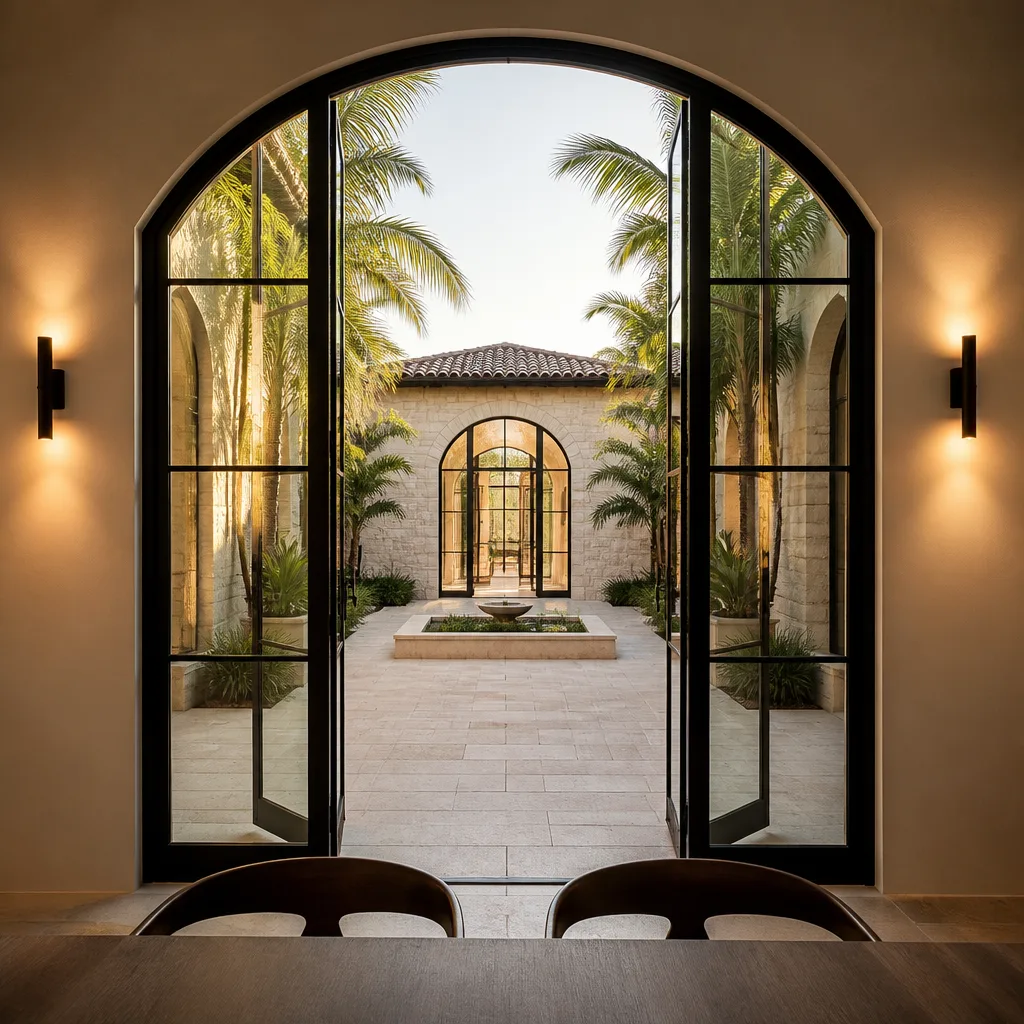
Call a licensed window and door contractor when: you observe brown organic staining anywhere on the interior frame or adjacent drywall; an impact-rated unit produces a dull thud in the sound test; a door or window that previously operated smoothly now requires force or shows changed gap patterns; or you have documented interior humidity below 55% but persistent fog between glass lites. These indicators cross from observation to diagnosis, and the cost of professional assessment is negligible against the cost of deferred structural repair. For a full overview of regional considerations, see The Complete Guide to Windows & Doors in North Miami.
Window Replacement in North Miami and Door Installation in North Miami through Sightline begin with a measured survey you keep, a written price before any work starts, and a documented photo record when the job is done. We offer free estimates in North Miami. Call (786) 706-0468 to schedule.
Frequently Asked Questions
Repair costs range from $180 for weep channel clearing and frame resealing to $3,400 for full frame replacement with structural repair of damaged framing. The median repair we perform in North Miami, flashing correction with sill pan replacement on a standard double-hung unit, runs $680 to $1,200. Call (786) 706-0468 for an exact quote on your specific opening, estimates are free, and we provide a free second opinion on any written estimate you have already received. Browse more guides & resources for North Miami homeowners.
No. Sightline’s written quote is generated from the measured survey and cannot differ from that document. Haven Clause 1, Have it in Writing, means the price you approve is the price on the final invoice. The only circumstance that would alter the scope is concealed damage discovered during work, and even then, we document the finding, stop work, and present a written addendum for your approval before proceeding.
Yes. Window and door replacement in North Miami requires a building permit from the City of North Miami Building Department for any unit change, and impact-rated products must match a current Miami-Dade NOA or Florida Product Approval. Sightline pulls permits, schedules inspections, and provides the passed inspection documentation as part of the standard scope. The permit cost is listed as a line item in your written quote, not buried in overhead.
Standard replacement of one to three openings in North Miami typically requires one installation day, with a second day for exterior finishing if stucco or siding repair is involved. Full-home replacement of 15 to 25 openings runs four to six installation days, sequenced to maintain security and weather protection each night. Permitting adds five to ten business days before work begins. We specify the schedule in writing, Haven Clause 2, Arrive on Schedule, and confirm by text the day before each crew arrival.
Impact-rated windows carry a permanent label, usually in the frame track or on the glass edge, indicating the design pressure rating, the applicable standard, ASTM E1886/E1996 or Miami-Dade TAS 201/202/203, and the manufacturer’s NOA number. If your home was built after 1994 in North Miami and you have no shutters, your windows are almost certainly impact-rated or the original installation violated code. If you cannot locate the label, we can identify the unit from manufacturer markings and verify its rating status during a free estimate visit.
If any aspect of our installation is not done right, we make it right, at no additional cost, for 365 days from completion. This is written into the Haven Standard that governs every job, not offered as a courtesy. The promise covers workmanship, operational performance, and weather tightness. Claims are handled by the same team that performed the installation, with the original photo record and measured survey as reference. Call (786) 706-0468 if you believe a Sightline installation requires attention.
The Bottom Line

Window and door warning signs in North Miami are misread because they look like minor issues, a stain, a stick, a fogged pane, when they are often early indicators of structural moisture paths or safety-critical glazing failure. The color of a stain, the sound of tapped glass, and the pattern of a binding door each point to a specific cause with a specific repair cost and urgency. Document what you observe before cleaning or attempting repair. Demand written scopes with line-item pricing, verified crew identification, and permit handling as standard, not as negotiation points. The cost of accurate early diagnosis is a fraction of the cost of deferred repair in North Miami’s climate.
Written by Sonia Raman, Owner at Sightline Windows & Doors North Miami, serving North Miami since 2012.
Six Reasons Homeowners Choose Sightline Windows & Doors North Miami
Impact systems engineered to design pressures up to +/-100, matched to your wind zone - your openings hold when the storm arrives.
Low-E insulated impact glass from our manufacturer lines commonly cuts monthly cooling bills 20-30%.
Laminated impact glass shuts out up to 40% of outside noise - traffic, neighbors, weather.
Monitoring services run $30-90 a month. Laminated impact glass resists forced entry around the clock, with no subscription.
Florida homeowners average around 25% savings on the windstorm portion of their policy after protecting every opening - some homes qualify for more.
A full impact package upgrades curb appeal, buyer confidence and appraised value in one project.
Other Sightline Windows & Doors North Miami Services