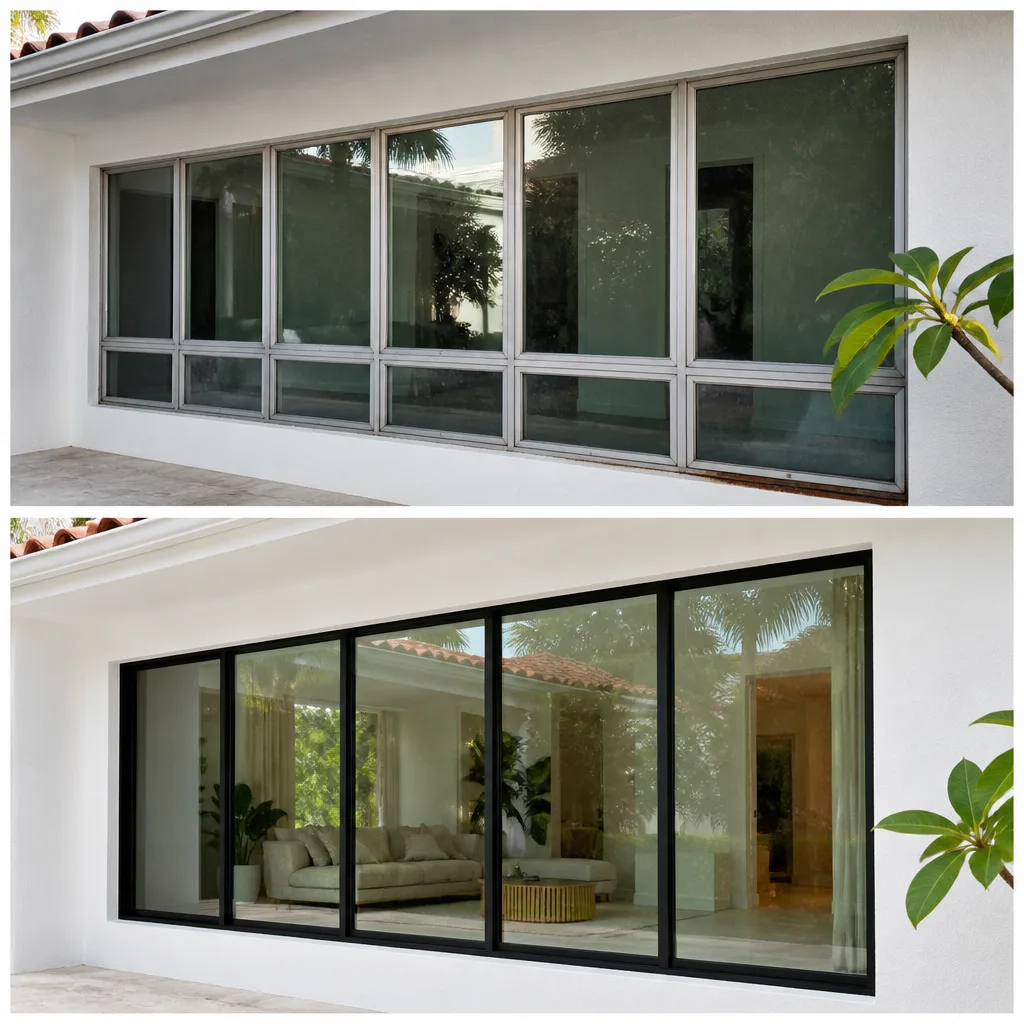
Last updated September 24, 2026
New windows and doors improve comfort, cut energy bills and add long-term value to your home. Sightline Windows & Doors North Miami pairs proven product lines with our own installing crews for lasting performance - and a price we put in writing.
1. Choose your installer
The unit is half the job - the install is the other half. Our own background-checked crews measure, set, seal and insulate every opening, and they know the lines we quote inside and out because they install them every week.
2. Select the right products
Compare styles, materials and glass packages side by side until the fit is right for your rooms, your budget and your goals. The product-line comparison below is the place to start.
3. Prepare your home for install
Before install day we walk you through a short checklist - furniture pulled back, treatments down, a clear path to each opening - so install day is watch-it-happen, not scramble.
Compare the Lines We Quote
Every project is priced on the same lines, side by side - the price indicators below are relative, and your consultant shows exact numbers on your actual openings.
PGTThe line Florida homeowners arrive naming - the most Miami-Dade certifications in the industry$$$
- More Miami-Dade NOA certifications than any other line we quote
- WinGuard, EnergyVue and ClassicVue Max systems built for every wind zone
- 99% on-time delivery keeps your install date on the calendar
CGIThe heavyweight impact line$$$$$
- Large-missile impact ratings for the strictest wind zones
- Architectural-grade aluminum with commercial-depth frames
- The line we quote when protection is the whole point
CWSThe Florida value pick$$
- Vinyl systems built in Florida for Florida codes
- Strong energy packages at the friendliest price point
- The smart start for whole-home replacements on a budget
ESWSlim lines, big glass$$$$
- Narrow-sightline aluminum for modern elevations
- Oversized openings and floor-to-ceiling glass
- Impact-rated without the bunker look
ECOThe aluminum impact workhorse$$$
- Miami-built aluminum impact systems
- A strong price-to-protection ratio for coastal homes
- Proven inventory lines with short lead times
Seasonal Windows & Doors Care for North Miami: Year-Round Homeowner’s Guide
The six weeks between May 15 and July 1 are when impact door threshold seals fail at the highest rate in South Florida. Hurricane season has already begun, but most homeowners in North Miami haven’t acted yet, and the combination of spring humidity swell plus deferred dry-season compression damage creates gaps that only show up under rain load. This guide replaces generic four-season maintenance with the three actual climate phases that govern window and door performance here: the dry season, the pre-hurricane preparation window, and the wet season. You’ll learn the specific inspection sequence we use, the failure modes that are unique to coastal South Florida, and when a problem requires professional intervention versus homeowner attention.
Quick Answer

North Miami homes need window and door care organized around three phases, not four seasons: dry-season contraction adjustments (November through April), pre-hurricane impact verification (April through June), and wet-season drainage maintenance (June through October). Annual sealant audits and post-storm salt-rinse protocols complete the cycle. Most hardware issues stem from humidity cycling, not age.
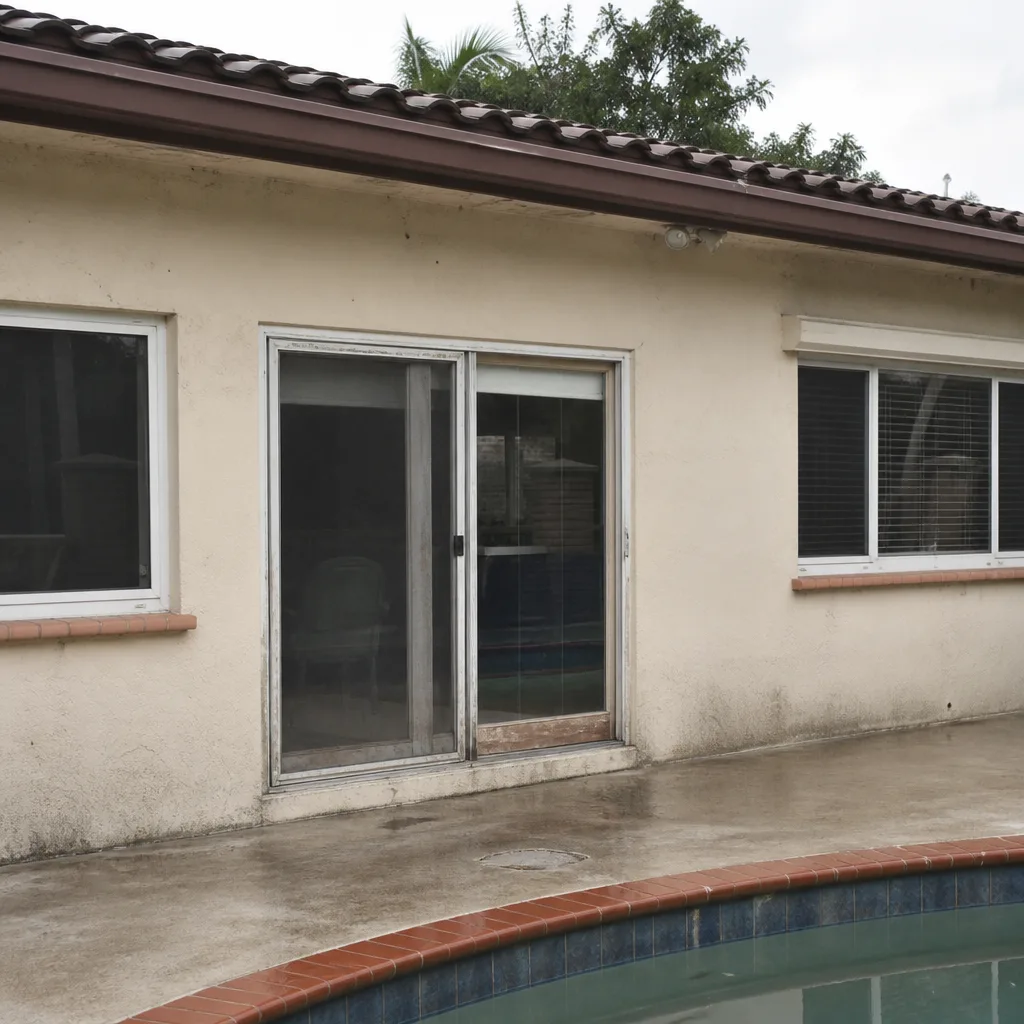 Before
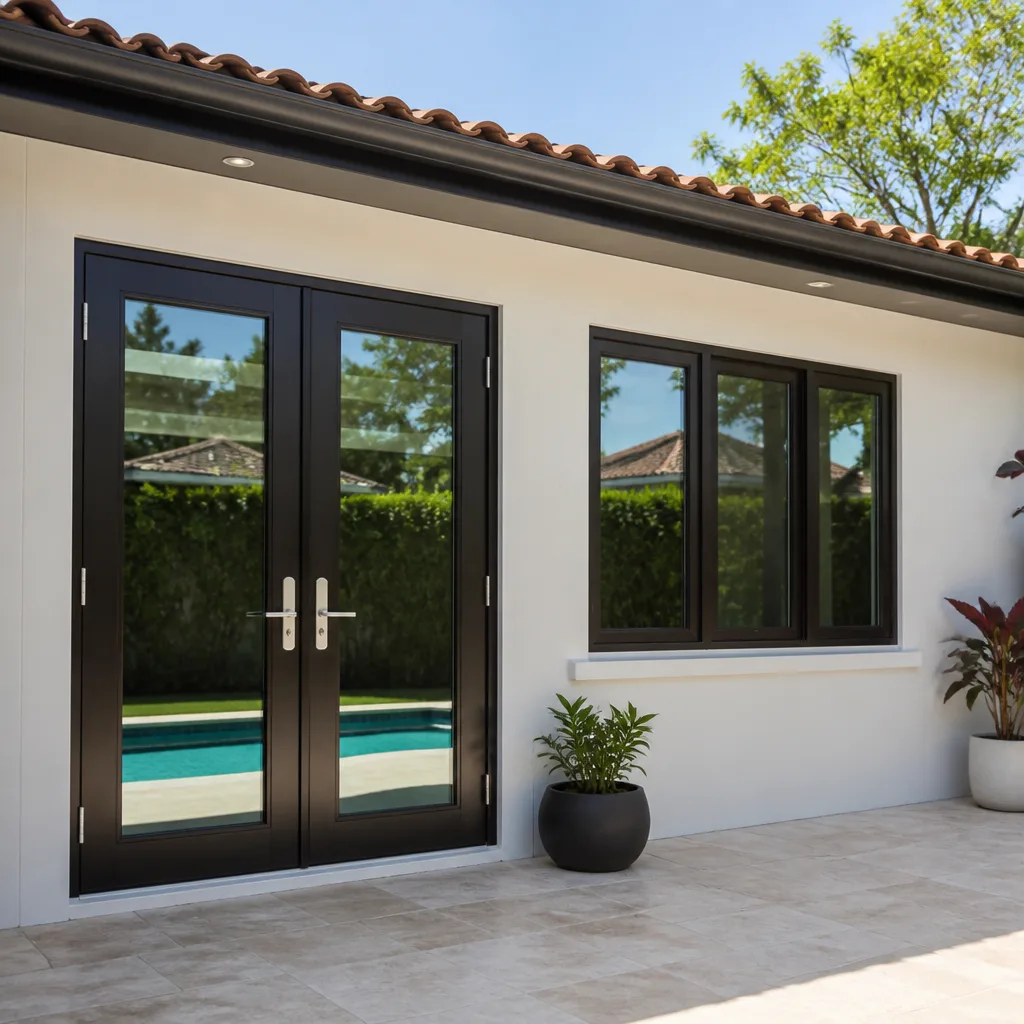 After
AfterTable of Contents
- Dry Season: Managing Contraction and Hardware Alignment
- Pre-Hurricane Preparation: Impact System Verification
- Wet Season: Drainage Paths and Water Intrusion Prevention
- Salt-Spray Protocol After Tropical Systems
- Annual Sealant Audit: Clean, Replace, or Reinstall
- Product-Specific Care by Manufacturer Line
- Common Mistakes to Avoid
- When to Call a Professional
- Frequently Asked Questions
Dry Season: Managing Contraction and Hardware Alignment
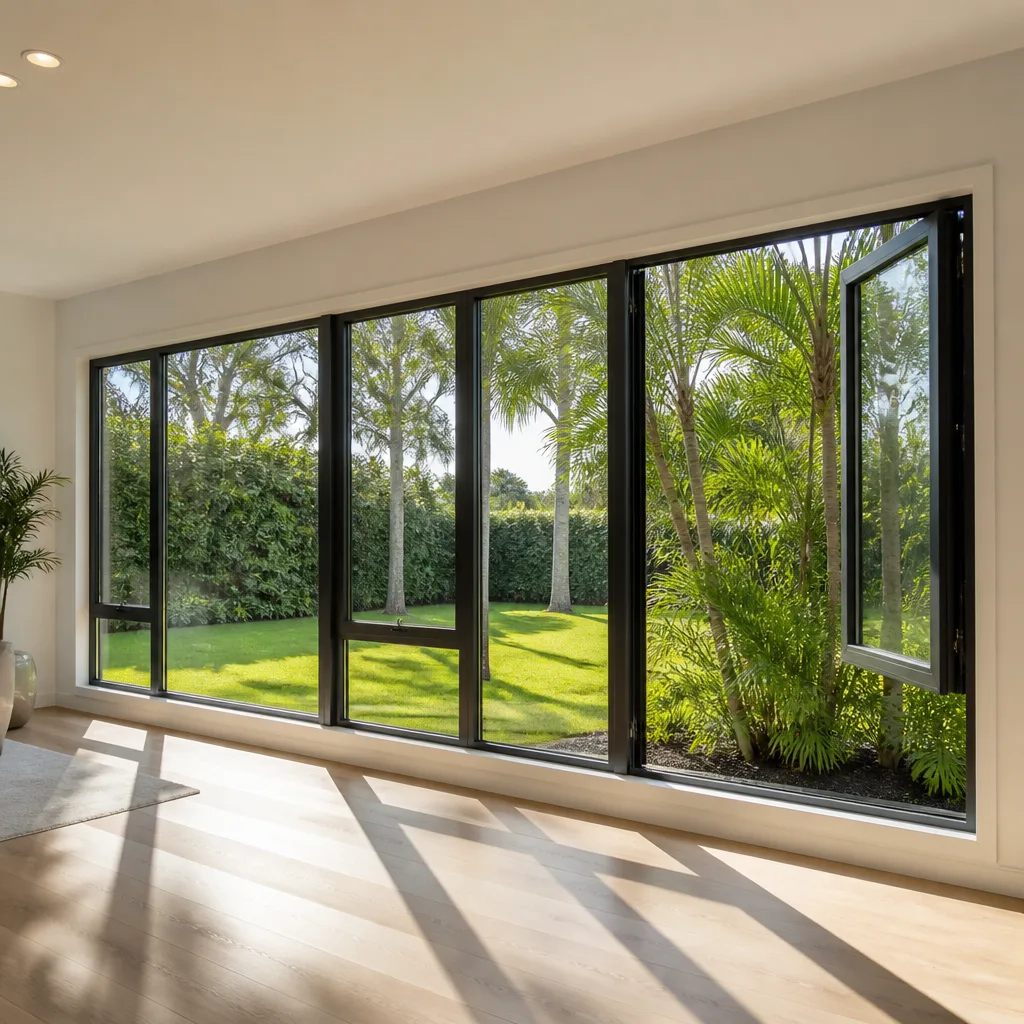
November through April in North Miami brings relative humidity down to 55-65 percent, sometimes lower during cold fronts that push dry continental air across the peninsula. That drop causes vinyl and aluminum frames to contract, wood components to shrink across the grain, and multi-point locking systems to fall out of alignment with their keepers. We’ve measured frame-setback changes of 2-3 millimeters on window installations in North Miami between January and March, enough to make a three-point lock feel sticky or let a door rattle in its frame.
The mistake is forcing the hardware. A multi-point lock that requires shoulder pressure to engage is telling you the frame has shifted, not that the mechanism is worn. Forcing it strips the cam, damages the gearbox, and turns a free adjustment into a $180-$340 hardware replacement.
Dry-Season Adjustment Sequence
- Check engagement before adjusting anything. Close the door or sash and mark where each locking point meets its keeper with a wax pencil. If the marks don’t align, the frame has shifted.
- Inspect hinge-side compression first. On hinged doors, loosen the hinge screws one turn, shift the door leaf to restore even gap width (3-5 mm top to bottom), then retorque. On vinyl frames, use a #2 Phillips driver; on aluminum, use a T-27 Torx to avoid cam-out.
- Adjust strike plates, not the lock body. Move keepers in the direction the frame has contracted. Most PGT and CGI multi-point systems use slotted keeper holes that allow 4-6 mm of adjustment without redrilling.
- Lubricate after alignment, not before. Dry lubricant (PTFE-based, never petroleum grease) on the face of the locking points. Petroleum products attract dust and harden in Florida heat.
- Document the gap measurement. Write down the final gap width at top, middle, and bottom. When the wet season returns, you’ll know whether the frame is returning to its original position or continuing to drift.
Homes in Keystone Point and Sans Souci, built on the 1950s-1970s concrete slabs common in North Miami, see more frame movement than newer construction on post-tensioned slabs. The older slabs transmit more ground vibration and have less dimensional stability. We’ve documented this in our photo records across hundreds of window replacements in North Miami - the correlation between slab vintage and hardware adjustment frequency is consistent.
Sliding door rollers also need attention in dry season. The hardened steel axles contract slightly in their nylon bushings, and the accumulated grit of wet-season operation grinds in the clearance gap. Lift the panel (most 8-foot systems weigh 120-160 pounds; two people, gloves, and a pry bar with a wood block), clean the track with denatured alcohol, and inspect the wheel profile. A flat spot larger than 3 mm means replacement. The axle should rotate freely with finger pressure; if it doesn’t, the bushing has seized and will score the stainless track.
Pre-Hurricane Preparation: Impact System Verification
April through June is the preparation window. Hurricane season starts June 1, but the smart interval is the six weeks before, when hardware stores still have stock and contractors aren’t booked three weeks out. In North Miami, this is also when the humidity transition begins, making it the ideal time to catch seals that have hardened over the dry season.
Impact-rated windows and doors are tested as complete systems: glazing, frame, anchor, and installation method together. A PGT WinGuard or CGI Estate Collection unit that passes HVHZ testing in the lab fails in the field if the anchor pattern is wrong or the perimeter sealant has aged out. The inspection sequence matters because some checks require the opening to be undisturbed.
Pre-Hurricane Inspection Sequence
- Glazing edge inspection. Stand at a 45-degree angle to the glass and sight down the edge where the lite meets the frame. You’re looking for the black polyvinyl butyral (PVB) interlayer visible as a thin line at the glass perimeter. If you see white or gray, the edge seal has failed and moisture has entered the laminated package. This is not cosmetic. The interlayer’s adhesion to the glass is what keeps the wind-borne debris from penetrating. Replace the unit.
- Astragal seal compression test. On double doors, the astragal is the vertical member where the two leaves meet. Close both doors and insert a 0.025-inch feeler gauge at three heights. If it slides through at any point, the seal isn’t compressing fully. Check the adjustable astragal bolt (most Therma-Tru and CGI systems have one) and verify the door is hanging plumb. A door out of plumb by even 2 degrees will gap at the astragal.
- Hinge-side anchor verification. Remove one hinge screw from the jamb side and inspect the anchor. It should be a minimum 3/16-inch diameter stainless or galvanized fastener, not a standard drywall screw, embedded into structural framing or a minimum 3/4-inch plywood buck. In North Miami homes built before 1992, we’ve found painted-over drywall screws, wood plugs, and in one case on NE 123rd Street, a hinge secured with a toggle bolt through hollow tile. Document what you find; this determines whether the opening meets current Florida Building Code TAS 201 or needs remediation.
- Operator hardware cycle test. Open and close every operable unit ten times. Binding, grinding, or a handle that won’t return to neutral indicates internal wear. Impact-rated hardware is engineered to specific pressure ratings; worn operators may not hold positive pressure during a storm.
- Perimeter sealant tactile check. Press a fingernail into the sealant bead at the frame-to-wall interface. It should feel rubbery and rebound. If it’s hard, chalky, or separates in layers, it’s past service life. We’ll cover sealant audit in detail below.
The Florida Building Code requires impact protection for all openings within one mile of the coast in Miami-Dade County, which includes all of North Miami. If your home was built between 1994 and 2002, it may have “protected” openings that are not actually impact-rated - shutters over standard glass, or film-applied annealed glass. These do not meet current code for replacement or for insurance mitigation credits. A door installation in North Miami that replaces a shutter-protected opening with a true impact-rated system can qualify for premium reductions, but only if the product approval number is documented and the installation matches the approval exactly.
We’ve completed 18,000+ openings since 2012, every one with a written price before work started and a documented photo record when finished. The pre-hurricane inspections that reveal the most significant issues are the ones where the homeowner has lived with a minor annoyance - a sticky lock, a whistling gap - long enough that they’ve stopped noticing it. That gap doesn’t stay minor in 120 mph sustained wind.
Wet Season: Drainage Paths and Water Intrusion Prevention
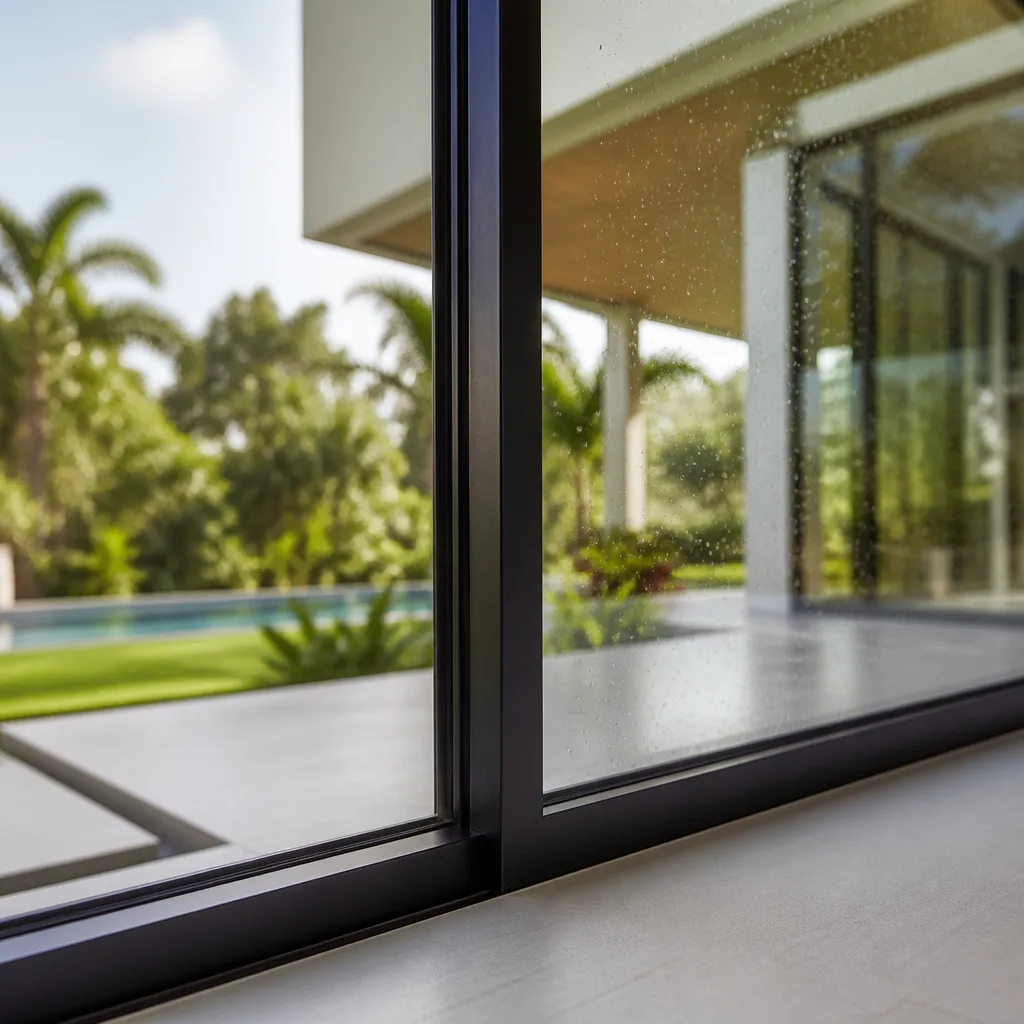
June through October in North Miami means afternoon convection cells, tropical waves, and the occasional organized system. The annual rainfall of 60+ inches concentrates in these months, and the water has to go somewhere. Windows and doors are designed with drainage paths, but those paths clog, and when they do, water enters the wall cavity at the buck-to-frame interface - the gap between the window frame and the rough opening framing - where it’s invisible until mold appears or drywall stains.
Weep Hole Maintenance
Weep holes are the small slots or tubes at the bottom of the exterior frame that let water drain from the sill track to the outside. In North Miami, they clog with:
- Paint from sloppy repainting campaigns, especially on rental properties in the Biscayne Park area
- Salt crust from coastal aerosol deposition
- Insect nests, particularly mud dauber wasps that favor the protected cavity
- Organic debris from overhead trees, common in the mature canopy of North Miami’s older neighborhoods
Clear weep holes with a pipe cleaner or compressed air, never a wire that will score the vinyl or aluminum and create a new leak path. The frequency depends on exposure: north-facing openings under tree cover need monthly checks; south-facing, elevated openings may go six weeks. After any tropical system with sustained winds above 40 mph, check immediately - wind-driven rain loads debris against the exterior that finds its way into drainage channels.
Buck-to-Frame Interface Inspection
This is where water intrusion becomes structural. The correct sequence is:
- Visual inspection from inside. Look for discoloration at the interior drywall corners nearest the opening. A yellow-brown stain that appears after heavy rain and fades as it dries indicates active intrusion.
- Probe the sealant bead. At the interior, where the window frame meets the drywall or trim, press the sealant with a putty knife. If it separates from either surface, the pressure-equalization chamber is compromised.
- Check the sill pan. The sill pan (or sloped sill adapter) should direct water to the exterior even if the primary seal fails. On retrofits in North Miami’s 1960s ranch homes, we’ve found flat 2×4 sills with no pan, relying entirely on caulk. These fail predictably.
- Monitor after correction. Place a moisture meter probe in the drywall at the lower corners after the next rain event. Readings above 16 percent indicate ongoing intrusion.
The window installation in North Miami that prevents this is one where the measured survey documents the existing sill condition before product selection. A sloped sill with a proper pan and end dams is not an upgrade; it’s Haven Clause 5 (No Surprises) applied to water management. The written scope specifies the pan material, slope, and fastening pattern before any work starts.
Salt-Spray Protocol After Tropical Systems
North Miami’s location on Biscayne Bay means every tropical system deposits salt aerosol across all exterior surfaces. The corrosion rate of 6063-T5 aluminum, the alloy used in most residential window and door frames, increases by a factor of 10 in marine atmospheres compared to inland environments. After a named storm or even a strong tropical wave with onshore flow, the correct rinse protocol protects hardware finish and frame integrity.
The window is 48 hours. Salt begins to crystallize and attract moisture within that period, initiating galvanic corrosion at dissimilar metal contacts - stainless fasteners in aluminum frames, brass rollers in aluminum tracks. The rinse must happen before this crystallization sets.
Post-Storm Rinse Protocol
- Plain water, low pressure. A garden hose with a trigger nozzle, not a pressure washer. Pressure drives water past seals that are designed for rainfall, not jet impingement.
- Top to bottom, exterior only. Rinse the head first, then the jambs, then the sill. This carries debris downward rather than trapping it in horizontal surfaces.
- Pay attention to hardware pockets. The cavities behind handles, locks, and operators collect salt spray and don’t drain naturally. Direct the stream into these areas for 10-15 seconds each.
- Dry with a clean microfiber. Air-drying leaves evaporative residue. Wipe horizontal surfaces, especially the sill track, where pooled water will concentrate salts.
- Lubricate after drying. PTFE dry lubricant on all moving parts. The rinse removes protective lubrication along with the salt.
We’ve documented frame pitting on 8-year-old aluminum units in Eastern Shores that could have been prevented with this protocol. The manufacturer warranty doesn’t cover environmental corrosion; the homeowner bears the replacement cost. A 20-minute rinse after each storm event is the cheapest maintenance you’ll perform.
For homes on the water in North Miami’s canal-front neighborhoods - Keystone Islands, Sans Souci Estates - increase frequency to any event with sustained onshore winds above 25 mph, not just named storms. The salt load from a strong northeasterly fetch across Biscayne Bay is substantial even without tropical organization.
Annual Sealant Audit: Clean, Replace, or Reinstall

Perimeter sealant is the most neglected component of window and door systems and the most common source of water intrusion we find in North Miami homes. Silicone sealant has a service life of 10-20 years in protected conditions; in South Florida’s UV and thermal cycling, 7-12 years is realistic. But “replace everything at year 10” is wasteful. The correct audit determines whether each bead needs cleaning, replacement, or complete reinstallation with backer rod.
Three-Category Assessment
| Condition | Test Method | Action |
|---|---|---|
| Surface oxidation, no adhesion loss | Fingernail press rebounds; no separation at either substrate | Clean with denatured alcohol and apply silicone protectant |
| Adhesion failure at one substrate, bulk rubber intact | Peel test shows clean separation from frame or wall, not cohesive tear | Remove failed section, prime both substrates, reapply compatible sealant |
| Cohesive failure (tears within the bead), hardening, or under-bead voids | Bead cracks when stretched; sounds hollow when tapped; no rebound | Remove entire bead, install backer rod, apply new sealant to proper depth-to-width ratio |
The backer rod is critical and often omitted. Sealant applied too thick (more than 1/2 inch deep) cures incompletely at the center and fails in shear. The backer rod, a closed-cell polyethylene foam, limits sealant depth to 1/4-3/8 inch and provides a bond-breaker so the sealant flexes at the joint plane, not within its own body. We’ve removed beads from North Miami homes where the sealant was 3/4 inch thick and cured to a hard crust over uncured goo - guaranteed failure.
Product compatibility matters. Most PGT and CGI frames specify neutral-cure silicone (not acetoxy-cure, which releases acetic acid and corrodes aluminum). ES Windows and ECO Window Systems have similar specifications. Using the wrong chemistry voids the frame finish warranty and accelerates corrosion. The product data sheet for your specific frame finish - anodized, painted, or Kynar-coated - specifies the approved sealant. We keep these sheets in every project file; Haven Clause 1 (Have it in writing) applies to material specifications too.
The annual audit should happen in March or April, before the wet season stress load begins. Document with dated photos of each opening, focusing on the sealant condition at the head and sill where water exposure is greatest. Compare year to year; degradation accelerates once it starts.
Product-Specific Care by Manufacturer Line
Sightline specifies from eight manufacturer lines - PGT, CGI, CWS, ES Windows, ECO Window Systems, Mr-Glass, Therma-Tru, and ViewLux - selected by what the opening requires, not by what is in stock. Each has specific maintenance considerations relevant to North Miami’s climate.
PGT WinGuard and CGI Estate Collection are the most common impact-rated vinyl and aluminum systems we install. Both use laminated glass with PVB interlayers. The edge seal inspection described above is the critical check; these units are factory-sealed and not field-repairable. Hardware is specific to each line - PGT uses a proprietary multi-point with a 35-degree handle sweep; CGI uses a similar system but with different keeper geometry. Replacement hardware must match exactly; “universal” multi-point kits do not fit.
Therma-Tru fiberglass entry doors with impact-rated glass packages require attention to the skin-to-frame seal. The fiberglass skin is thermoset and dimensionally stable, but the polyurethane core can absorb moisture if the edge seal is breached. We’ve found this on north-facing Therma-Tru units in North Miami’s older homes where roof overhangs are minimal and the door gets direct rain. The symptom is a soft spot on the skin, detectable by pressing with a firm thumb. Left unaddressed, the core delaminates and the door loses structural integrity.
Mr-Glass custom and geometric units, common in the modern architecture of North Miami’s newer construction, use heavier glass lites and specialized hardware rated for the increased weight. The hinge and roller maintenance intervals are shorter - every 18 months rather than 24 - because the load is higher. The documented photo record on every Sightline visit includes hardware wear measurements so we can predict replacement before failure.
All eight lines are available for review at our North Miami showroom, with cutaway samples showing frame construction, hardware mounting, and glazing packages. The written quote specifies the manufacturer, series, and performance values - U-factor, SHGC, and design pressure - so you know what you’re receiving.
Common Mistakes to Avoid
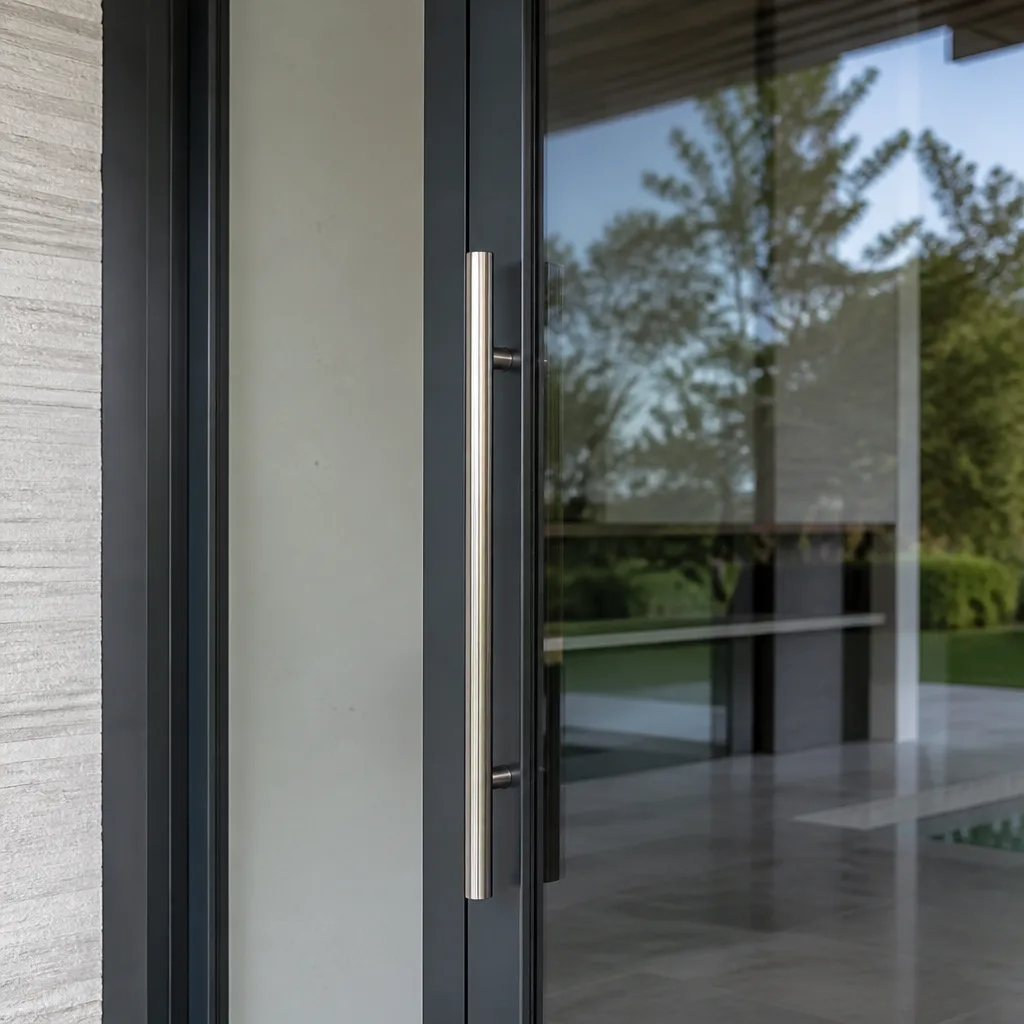
- Using WD-40 on window and door hardware. The petroleum base attracts dust and gums up in Florida heat. Within six months, the mechanism is stickier than before. Use PTFE dry lubricant only.
- Pressure-washing impact-rated glass directly. The laminating interlayer can delaminate from sustained jet pressure at the edge, especially on older units where the edge seal has begun to degrade. Garden hose pressure only.
- Ignoring a lock that “just needs a little push.” Forcing a misaligned multi-point lock strips the gearbox cam. The $12 adjustment becomes a $280 hardware replacement. In North Miami’s humid climate, the misalignment is almost always frame movement, not wear.
- Caulking over old caulk. New sealant won’t adhere to oxidized or contaminated old sealant. The repair fails within one wet season. Complete removal and proper surface preparation is the only durable solution.
- Waiting until a storm is named to check impact protection. By then, contractors are booked, supply houses are empty, and you’re choosing from what’s left, not what you need. The April-June window exists for a reason.
- Assuming all “impact” products are equal. Miami-Dade County requires specific product approval numbers. A window labeled “hurricane resistant” without a Florida Product Approval or Miami-Dade Notice of Acceptance is not code-compliant. Verify the number on the label against the Florida Building Code database.
- Neglecting the garage door. Impact-rated garage doors are part of the envelope. The astragal seal at the bottom, the track alignment, and the automatic reverse function all need seasonal attention. A failed garage door in a storm pressurizes the entire structure.
When to Call a Professional
Some conditions require trained assessment and specialized tools. Call Sightline Windows & Doors North Miami at (786) 706-0468 for a free estimate if you observe: laminated glass edge fogging or PVB discoloration; door or window frames that have shifted visibly in their openings; water stains that reappear after cleaning; hardware that binds after adjustment attempts; or any opening that failed to perform during a previous storm event. Our technicians are background-checked, uniformed, and identified by license number before arrival, per Haven Clause 3 (Verified Crews). Every visit produces a documented photo record, and the written scope - the same document as the measured survey you keep - specifies exactly what we found and what we recommend.
Frequently Asked Questions
Inspect operable hardware monthly during wet season, drainage paths every six weeks, and perform a full sealant and impact-system audit annually in March or April. Post-storm rinses should follow any tropical system with sustained winds above 40 mph. Call (786) 706-0468 to schedule your annual audit - estimates are free.
“Impact-rated” means the product has passed ASTM E1886/E1996 missile impact and cyclic pressure testing and carries a Florida Product Approval or Miami-Dade Notice of Acceptance. “Hurricane-resistant” is marketing language without regulatory meaning. Only impact-rated products qualify for insurance mitigation credits and meet Florida Building Code for replacement in HVHZ zones like North Miami. We verify approval numbers on every window installation in North Miami.
Humidity swells the vinyl or aluminum frame slightly, and the track accumulates organic debris that hardens in dry season then rehydrates and expands in wet season. The rollers may also have flat-spotted from dry-season contraction. Clean the track, inspect the wheel profile, and verify the panel is hanging plumb in the frame. If the problem persists after these steps, the roller carriage may need replacement.
Typical range is $8-$15 per linear foot for removal, surface preparation, backer rod installation, and proper sealant application, depending on access difficulty and frame material. A standard 6-foot by 4-foot double-hung has approximately 20 linear feet of perimeter sealant. We provide a written line-item quote before any work starts, per Haven Clause 1. Call (786) 706-0468 for an exact figure on your openings - estimates are free.
Installation requires Florida-licensed contractors for permit and inspection compliance, and the installation method must match the manufacturer’s approved details exactly or the product approval is void. Structural anchoring, sill pan integration, and pressure-equalization details are not DIY-appropriate. The 365-Day Done Right Promise applies only to Sightline-installed work because we control the full chain from measured survey to final inspection.
Yes. Miami-Dade County requires permits for all window and door replacements, with specific inspection points for impact-rated products. Sightline pulls permits, schedules inspections, and provides the passed inspection documentation as part of every project. The permit number is referenced in your written scope. This is standard, not an add-on.
Check for a permanent label on the frame or glass showing the Florida Product Approval number or Miami-Dade Notice of Acceptance number. Enter this number in the Florida Building Commission Product Approval System or Miami-Dade County database. If there’s no label, or the number doesn’t validate, the product is not code-compliant for replacement or for insurance credits. We provide free second opinions on any written estimate, including verification of existing product approvals.
The Bottom Line
North Miami’s climate demands a maintenance approach organized around real conditions, not calendar quarters. Dry-season contraction, pre-hurricane impact verification, and wet-season drainage management are the three phases that matter. The specific protocols - adjustment without forcing, edge-seal inspection, weep-hole clearing, salt-rinse timing, and sealant audit with backer-rod discipline - prevent the failures that become emergencies when a storm approaches. Documentation is the difference between guessing and knowing: dated photos, gap measurements, and written scopes that don’t change between quote and invoice.
Written by Sonia Raman, Owner at Sightline Windows & Doors North Miami, serving North Miami since 2012.
Six Reasons Homeowners Choose Sightline Windows & Doors North Miami

Impact systems engineered to design pressures up to +/-100, matched to your wind zone - your openings hold when the storm arrives.
Low-E insulated impact glass from our manufacturer lines commonly cuts monthly cooling bills 20-30%.
Laminated impact glass shuts out up to 40% of outside noise - traffic, neighbors, weather.
Monitoring services run $30-90 a month. Laminated impact glass resists forced entry around the clock, with no subscription.
Florida homeowners average around 25% savings on the windstorm portion of their policy after protecting every opening - some homes qualify for more.
A full impact package upgrades curb appeal, buyer confidence and appraised value in one project.
Other Sightline Windows & Doors North Miami Services
What Neighbors Say About Sightline Windows & Doors North Miami